
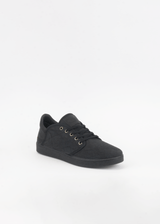
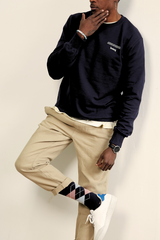
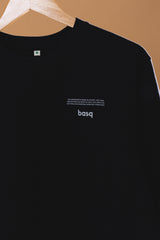

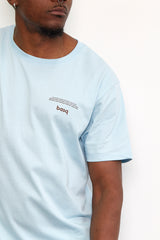
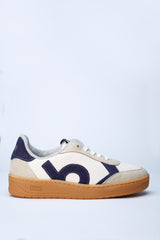
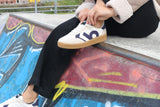




Every year, approximately 22 billion pairs of shoes are produced worldwide. Most of them end up in landfills within 12 months. That staggering cycle of production and disposal represents one of the fashion industry's most overlooked environmental problems — and it is precisely the problem that the circular economy aims to solve.
At Basq Company, we believe that sustainable footwear is not about perfection; it is about making better choices at every stage of a product's life. From the materials we source to the way we manufacture, every decision reflects a commitment to keeping resources in use for as long as possible and minimising waste.
What Is the Circular Economy — and Why Does Footwear Need It?
The traditional model of fashion works in a straight line: extract raw materials, manufacture products, sell them, and discard them. This linear approach has brought us fast fashion, overflowing landfills, and oceans contaminated with microplastics.
The circular economy offers an alternative. Instead of treating products as disposable, circular design focuses on creating items that can be reused, repaired, recycled, or repurposed. In the footwear industry, this means rethinking every component of a shoe — from the sole to the laces — with its second life in mind.
For conscious consumers looking for eco-friendly sneakers, understanding circularity is the key to making purchases that genuinely reduce their environmental impact, rather than simply greenwashing their wardrobe.
From Discarded Tires to Durable Soles
One of the most innovative aspects of Basq Company's approach to sustainable sneakers is our use of recycled tires. Every year, around one billion tires reach the end of their useful life globally. Most are either burned, buried, or abandoned — each option creating its own environmental hazard.
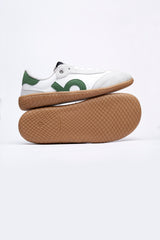
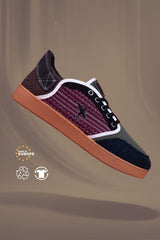
Through an innovative deconstruction system, we separate the tire tread — where the most valuable material properties are concentrated — and transform it into the base for our shoe soles. The result is a sole that offers maximum grip and exceptional durability, all without extracting a single new resource from the earth. This process exemplifies what circular design looks like in practice: taking a waste product that would otherwise pollute the environment and giving it a new, functional purpose in sustainable footwear.
Plastic Bottles Become Your Next Pair of Sneakers
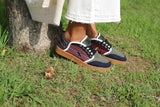
The plastic crisis is well documented: over 8 million tonnes of plastic enter the world's oceans every single year. At Basq Company, we tackle this problem by incorporating recycled plastic bottles into the upper fabric of our recycled sneakers.
Each pair of our sneakers repurposes approximately six plastic bottles that might otherwise have ended up contaminating marine ecosystems. The recycled PET is transformed into a durable, comfortable textile that performs just as well as — and often better than — conventional synthetic materials.
But this is not just about materials. Our manufacturing process, powered by solar energy, uses virtually zero litres of water and reduces CO2 emissions by 75% compared to conventional shoe production. Sustainable manufacturing is not a marketing claim for us; it is a measurable reality.
Bamboo and Organic Cotton: Nature's Performance Materials
Beyond recycled materials, Basq Company also works with renewable natural fibres. Recycled bamboo, sourced from construction waste rather than freshly harvested forests, offers natural breathability, moisture management, and antimicrobial properties that synthetic materials struggle to match.
Our organic cotton — grown without pesticides or harmful chemicals — completes a material palette that is designed for both comfort and ecological responsibility. These are not compromises; they are choices that prove eco-friendly shoes can outperform their conventional counterparts.
Made Locally, Made Ethically
Sustainability is not only about materials. Where and how a product is made matters enormously.
All Basq Company products are manufactured in Europe, within 2,000 kilometres of our main sales locations. This local production model dramatically reduces the carbon footprint associated with transportation — a significant factor for any brand claiming to offer sustainable fashion.
But proximity is only part of the equation. Manufacturing in developed countries means that our workers are protected by strong labour laws, fair wages, and safe working conditions. In an industry where fast fashion brands routinely rely on exploitative labour in unregulated factories, this commitment to ethical production is non-negotiable.
We produce in small series and on demand, avoiding the excess stock and unnecessary waste that plague the conventional fashion industry. Every pair of Basq sneakers exists because someone wanted it — not because an algorithm predicted a trend.
Barefoot Design Meets Circular Values
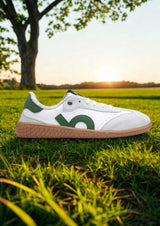
Our latest innovation, the Basq Laga barefoot collection, represents the convergence of two powerful ideas: natural movement and environmental responsibility.
Barefoot shoes — also known as minimalist footwear — are designed to let your feet move the way nature intended. A wide toe box, zero drop sole, and flexible construction promote healthier foot mechanics, better posture, and stronger natural muscles.
What makes the Laga collection unique is that these benefits come wrapped in the same circular, recycled, and vegan materials that define everything we do. Healthy feet and a healthier planet are not competing goals; at Basq Company, they go hand in hand.
How to Make Better Choices as a Consumer
Transitioning to a more sustainable wardrobe does not require throwing everything away and starting over. The most sustainable shoe is the one you already own. But when it is time to buy new, here are some principles that align with the circular economy:
- Choose quality over quantity. A well-made pair of sustainable sneakers that lasts several years is always a better investment — financially and environmentally — than multiple pairs of cheap, disposable shoes.
- Ask where it is made. Local production means lower emissions, better oversight, and fair labour. Look for brands that are transparent about their supply chain.
- Check the materials. Recycled, organic, and vegan materials significantly reduce a product's environmental footprint. Look for specific claims — "recycled PET from plastic bottles" is far more meaningful than a vague "eco-friendly" label
- Support circular brands. Brands that design for longevity, use recycled inputs, and minimise waste are actively building the future of fashion.
Your purchase is a vote for the kind of industry you want to see.
The Future of Footwear Is Circular
The fashion industry is at a crossroads. Consumers — particularly Gen Z and millennials — are increasingly demanding transparency, sustainability, and authenticity from the brands they support. Slow fashion is no longer a niche movement; it is becoming the standard by which brands are judged.
At Basq Company, we have always believed that being part of the change means more than making promises. It means recycled tires becoming soles, plastic bottles becoming sneakers, and solar energy powering production. It means manufacturing locally, paying fairly, and producing only what is needed.
The circular economy is not a future aspiration. It is how we work today.
Be part of the change.